

Tokenomics & Market Behavior — The Complete Guide to Crypto Economics and Investment Dynamics

Updated: Dec 19, 2025
Introduction to Tokenomics and Market Behavior
Tokenomics and market behavior are about understanding how crypto assets actually work in economic terms.
These tokens function within systems designed around rules and incentives, not just as digital symbols.
How they are created, shared, or even removed from circulation—and mechanisms like vesting or staking—affect who has influence and when.
Paying attention to these details helps you see the real economic dynamics behind tokens, beyond just the ups and downs of their prices.
Markets add another layer. Token prices are shaped by the amount of liquidity in the system, the flows of funds between investors, and macroeconomic conditions.

A Bitcoin halving alters the supply schedule, changes in interest rates influence capital movement, and large institutional transactions can affect market distribution.
Tracking these variables over time makes it possible to see which token models remain resilient and which fail to maintain value.
The purpose of this guide is to provide clear, practical insight. It explains how tokens operate within economic systems, how market dynamics affect their value, and how these factors influence decision-making.
Each section references detailed subposts—covering token burns, buybacks, vesting schedules, mining economics, and portfolio construction—offering a structured path from grasping core concepts to applying them effectively.
Tokenomics does not exist in isolation. It is closely connected to network security, the design of protocols, and how participants behave on-chain.
Recognizing these links helps explain how assets actually function, reveals where risks may arise, and enables strategies based on real economic patterns instead of speculation.
Token Supply Mechanics
Token supply mechanics describe what actually happens to tokens once a project is live. Tokens are created, released, locked, or removed over time, and these movements shape how the ecosystem feels and behaves.
When new tokens enter circulation, activity often increases. When supply is reduced through burns or buybacks, pressure shifts in the opposite direction.
Vesting schedules slow things down on purpose, spreading token access over time so teams and early investors stay aligned with the project instead of exiting immediately.
Watching these supply changes gives a clearer sense of how a project is managed, how committed major holders are, and whether the system is built for short-term action or long-term stability.
Over time, analyzing token supply dynamics helps explain project momentum, highlights scarcity effects, and provides a framework to understand incentives and the movement of value across the network.
Token Burns & Buybacks
Token burns and buybacks are just two ways a project can control how many tokens are floating around. When a token is burned, it’s gone for good, which makes the rest feel scarcer and often more valuable.

Teams usually burn tokens after fundraising rounds, from protocol fees, or on a schedule the system sets.
Buybacks are a little different—the project actually goes out and buys tokens from the market, either to show they believe in what they’re building or to give some value back to the community.
Watching when these burns and buybacks happen, how big they are, and how often they happen can tell a lot about what the team is trying to do, what they care about, and how solid the project really is.
Learn more:
Token Minting & Inflation Control
Minting is just how new tokens get added to the system. Usually, it happens as rewards for staking, helping secure the network, or other protocol incentives.
But it can’t be unlimited—projects need ways to control inflation. That might mean a hard cap, a set schedule, or some algorithm that adjusts how many tokens are created over time.

If minting isn’t managed well, new tokens can dilute existing holdings and mess with incentives. Done right, though, it rewards people who are actively participating while keeping token value stable.
Looking at minting schedules alongside how the network is actually growing can give a clear picture of whether token supply is keeping pace with the ecosystem or getting out of hand.
Learn more:
Vesting Schedules & Lockups
Vesting schedules and lockups are basically just the rules for when tokens that have been set aside—for team members, early supporters, or partners—can actually be used or sold.
They make sure that big chunks of tokens don’t hit the market all at once, which could send prices bouncing around. It’s also a way to keep everyone committed for the long run.
For instance, a project might lock up team tokens for a few years and drip them out slowly, so the market never gets overwhelmed.
Investors and analysts keep an eye on these schedules because they give a clue about when large amounts of tokens might start circulating—and how that could shake up prices.
When done right, vesting keeps the network steady and gives everyone confidence that the project is playing the long game.
When you look at this together with burns, buybacks, and minting, you start to see the bigger picture of how a project handles scarcity, rewards participation, and thinks ahead.
Watching how tokens move—when they’re created, taken out of circulation, or slowly unlocked—gives insight into the health of the project, potential risks, and what the team is really trying to accomplish.
Learn more:
Macro & Market Factors
Macroeconomic Impacts on Bitcoin and Crypto
Crypto markets aren’t separate from the real world—they move with what’s happening in the broader economy. When interest rates go up, money usually heads to safer places, and when they drop, crypto suddenly looks more interesting.
Inflation can make scarce tokens like Bitcoin feel like a safe spot, and big events—recessions, trade tensions, or global conflicts—can nudge investors’ choices and ripple through prices.

Watching these patterns makes market swings easier to understand and shows how people actually respond to what’s happening around them.
Learn more:
Bitcoin Halving Cycles and Market Reactions
Bitcoin follows a kind of clock called the halving. Every four years or so, miners’ rewards get sliced in half. That means fewer new coins flow into the market, slowly making Bitcoin more rare.
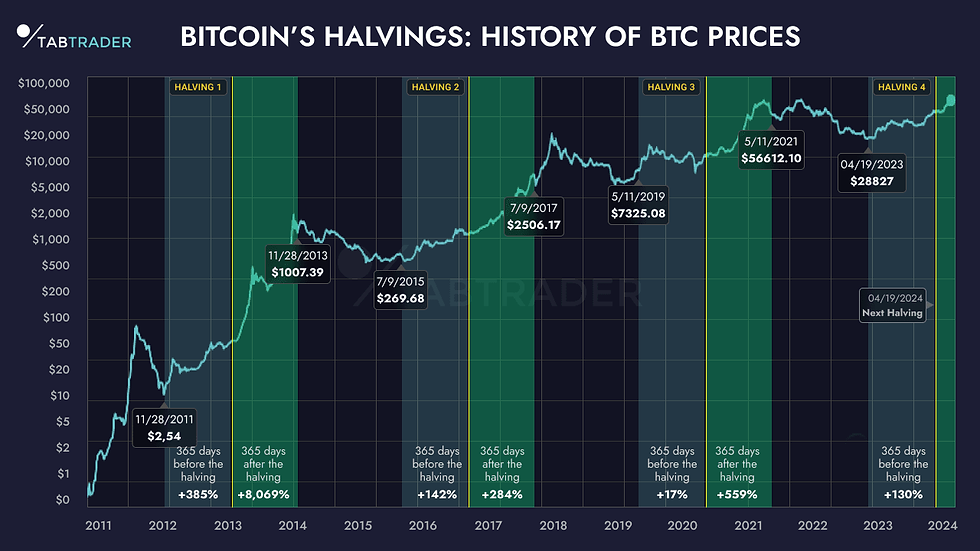
Halvings tend to get people talking and prices moving, because traders and investors respond to the change. Watching these cycles makes it easier to see why Bitcoin’s market behaves the way it does around these key moments.
Learn more:
Regulatory Influences on Market Behavior
Crypto markets don’t just move randomly—regulations play a major role, sometimes in ways beginners don’t expect. Rules on taxes, trading, issuing tokens, or running exchanges can either encourage people to dive in or make them step back.
Strong, clear frameworks usually boost confidence and participation, while sudden bans or vague guidance can create volatility and dry up liquidity. Because crypto is global, changes in big markets like the U.S., EU, or China can influence prices everywhere.
Knowing the regulatory landscape gives a real edge when trying to anticipate market reactions.
Mixing these legal factors with macro trends and halving events gives a clearer picture of the forces behind crypto prices.
They’re not the only influences—sentiment and network activity matter too—but they help explain why certain trends pop up and how markets react over time.
Learn more:
Investment Strategies & Portfolio Construction
Long-Term vs Short-Term Crypto Portfolios
Long-term and short-term crypto strategies are really two different ways of looking at the market.
A long-term approach leans on big, established networks like Bitcoin or Ethereum, aiming to grow steadily as more people start using them.
It’s about staying calm—riding out the wild swings and not losing your cool every time the price jumps or dips.
Short-term strategies are a completely different story: they’re all about spotting quick opportunities, trading newer or smaller tokens that can jump the moment news hits, trends spike, or hype takes over.

Both require thinking ahead. Long-term investors focus on patience, holding through the ups and downs, and letting growth happen over months or years.
Short-term traders, on the other hand, have to stay sharp and ready to move the instant the market shifts. It’s like the difference between running a marathon and sprinting—you need very different mindsets, but both can succeed if approached the right way.
Learn more:
Risk Management & Diversification
Risk management comes down to understanding exposure and how much risk is actually being taken. Diversification plays a central role.
Spreading capital across different types of tokens or sectors helps ensure that a single failing project does not pull the entire portfolio down with it.
But diversification alone is not enough. Position sizing matters, as do clear exit points for losses and profits, rather than relying on hope or emotion.

It is also important to observe how assets move in relation to one another, especially during periods of market stress.
Monitoring overall market sentiment and adjusting exposure as conditions change can reduce the impact of sudden shifts.
The objective is not to eliminate risk entirely—especially in crypto—but to keep it controlled, allowing participation in upside while limiting unnecessary damage.
Learn more:
Asset Allocation
Asset allocation is about deciding where capital sits and why. Larger, established tokens usually make up the core of a portfolio because they tend to be more resilient and liquid.
They don’t eliminate risk, but they often provide a steadier base than smaller, more experimental assets.
Around that core, newer sectors—such as DeFi, Web3 infrastructure, or AI-related blockchain projects—can add growth potential, though they come with sharper swings and higher uncertainty.
How much weight each area gets is a practical decision about risk versus reward. A heavier tilt toward established assets favors stability, while more exposure to emerging sectors increases upside but also volatility.
Staking and other yield mechanisms can play a supporting role by generating ongoing returns and reinforcing participation in the networks themselves.
Revisiting allocations as markets shift, performance changes, or priorities evolve helps keep the portfolio aligned with its intended purpose rather than drifting on autopilot.
Learn more:
Advanced Token Economics
Governance Tokens & Voting Mechanics
Governance tokens are supposed to let holders shape how a protocol develops. Rather than a small team making every decision, things like fee changes, upgrades, or treasury spending are opened up for voting.
In theory, this creates decentralization. In practice, it’s often uneven. Voting power tends to cluster with early adopters, large holders, or institutions, while many users never participate at all.
When turnout is low, a handful of wallets can effectively decide the direction of the project. Paying attention to who controls voting power, how proposals are introduced and approved, and how active governance really is helps reveal whether it functions as real decision-making—or mostly as a label.
Learn more:
Utility vs Security Tokens
Not all tokens serve the same economic role. Utility tokens are designed to be used within a network—paying fees, accessing services, staking for security, or participating in governance.
Their value is closely tied to real usage and demand inside the ecosystem. Security tokens, by contrast, represent claims on cash flows, profits, or ownership-like rights and are typically subject to financial regulation.

The line between the two is not always clean, which is why classification matters. How a token is structured affects who can buy it, how it can be traded, and what risks it carries.
Understanding whether a token’s value depends on network usage or on expectations of financial returns changes how it should be evaluated.
Learn more:
Token Velocity & Economic Incentives
Token velocity describes how quickly tokens move through an ecosystem. High velocity means tokens are spent or traded rapidly, while low velocity implies they are held longer. This has direct economic consequences.
If tokens move too quickly, it can put downward pressure on price, even if the network itself is active.
Incentive design plays a major role here. Staking rewards, lockups, fee discounts, or governance rights can encourage holding, while pure payment tokens tend to circulate faster.
A well-designed system balances usefulness with reasons to hold, aligning participant behavior with network stability.
Observing velocity alongside incentives provides insight into whether a token model supports long-term value or relies mainly on constant inflows of new demand.
Together, governance structures, token classification, and velocity form the deeper layer of token economics.
They explain not just what a token does, but how power is distributed, how value is justified, and how behavior inside the system is shaped.
Learn more:
Exchanges & Liquidity Considerations
How and where a token is traded matters just as much as the token itself. The exchange it trades on and the level of available liquidity shape price behavior, volatility, and how easily positions can be opened or closed.
Looking at these mechanics explains why the same token can appear stable in one market and highly volatile in another, even though the underlying asset is identical.
Centralized vs Decentralized Trading
Centralized exchanges (CEXs) are still where most crypto trading happens. They make buying and selling straightforward, with plenty of liquidity to handle big trades, fast execution, and familiar tools like order books, limits, and margin options.
Because they can absorb large volumes, even sizable trades usually don’t send prices swinging wildly.
The catch is trust—you’re relying on the exchange to keep your funds safe, process withdrawals correctly, and follow the rules.

Any glitch, freeze, or sudden change in policy can lock up assets instantly, so risk is always there.
Decentralized exchanges (DEXs) take a completely different approach. Trades happen directly on the blockchain via smart contracts, with no central party controlling the funds.
That removes the risk of a counterparty messing things up, but it introduces other challenges.
Liquidity tends to be lower, network congestion can slow transactions, and even modest trades can shift prices noticeably.
DEXs shine in giving anyone open, permissionless access and full transparency, but using them effectively means really understanding how liquidity and pricing actually behave—otherwise, surprises are almost guaranteed.
Learn more:
Liquidity Pools and Price Impact
On most decentralized exchanges, trading happens through liquidity pools rather than order books. These pools are funded by liquidity providers who deposit token pairs in exchange for fees.
Prices are set by mathematical formulas, not by matching buyers and sellers. This means that trade size matters a lot. A small trade might barely move the price, while a larger one can shift it significantly.
This effect is known as price impact. The lower the liquidity in a pool, the more dramatic the price movement caused by a single transaction.
Thin liquidity can make tokens look volatile even when overall interest is low. Observing pool size, trading volume, and fee structure helps explain whether price moves are driven by real demand or simply by limited liquidity.
Learn more:
Market Depth and Slippage
Market depth describes how much buying and selling interest exists at different price levels. Deep markets can handle large trades with minimal disruption.
Shallow markets cannot. Slippage is the result of this imbalance—the difference between the expected price of a trade and the price actually received once it executes.
High slippage often shows up in low-liquidity tokens, during periods of market stress, or on smaller exchanges. It’s a hidden cost that doesn’t appear on charts but directly affects outcomes.
Learn more:

Looking at order books on centralized exchanges or liquidity distribution on decentralized platforms gives a clearer picture of real tradability, beyond headline price or market cap.
Together, exchange structure, liquidity depth, and execution mechanics explain why some markets feel smooth and efficient while others feel erratic.
They determine not just what a token is “worth,” but how that value can actually be accessed in practice.
Conclusion
Grasping crypto from a tokenomics and market angle is really about stepping back and seeing how all the pieces fit together.
How tokens are minted, burned, bought back, or gradually unlocked isn’t just technical—it shapes who acts, when, and why across the network.
Governance rules, how exchanges operate, and the liquidity available all affect how decisions play out and how smoothly participants can move.
Broader forces—macroeconomics, Bitcoin halving cycles, and regulatory changes—add another layer, helping explain price swings that might otherwise look random.
Investment strategies, portfolio building, and risk management are where it all comes together.
Balancing long-term holds with short-term moves, spreading exposure across different tokens, taking part in staking, and thinking carefully about allocations all help navigate crypto’s ups and downs.
It’s about seeing the system as a whole and making moves that make sense within it, rather than just chasing prices.
If this guide helped clarify how token economics and market forces interact, explore our other core crypto hubs for deeper system-level analysis.


Comments